
Restaurant BYOB and Corkage: Questions Before You Go
On this page
Quick answer
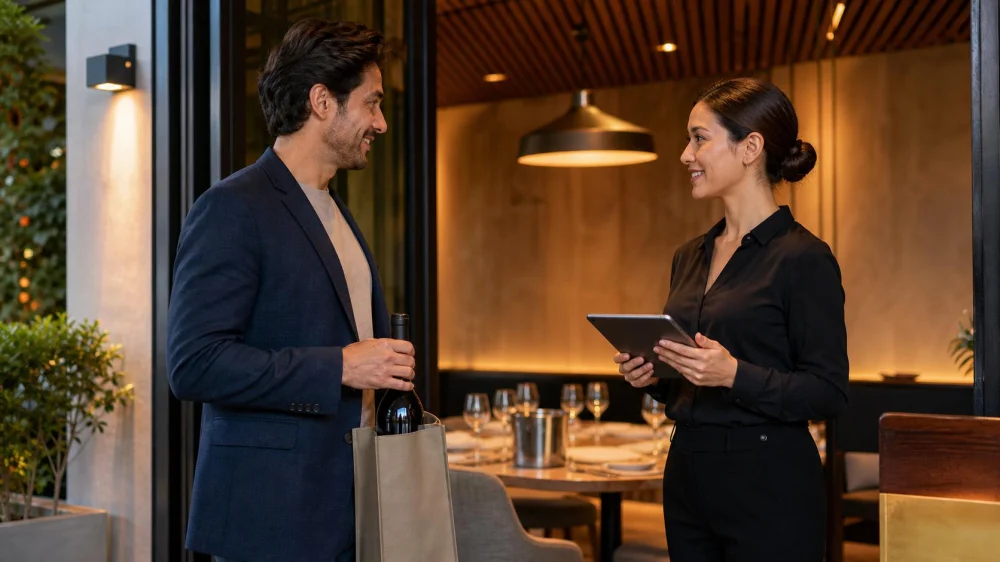
BYOB means a restaurant permits guests to bring a specified alcoholic beverage, while corkage is a fee for opening, serving, or handling it. Neither is a universal right. Before visiting, ask whether BYOB is currently allowed, which beverages and bottle sizes qualify, the fee per bottle, bottle limits, service rules, age requirements, and what happens to unfinished wine.

Define BYOB and corkage
BYOB may mean “bring your own bottle,” “beer,” or another beverage depending on the establishment. A restaurant can allow wine but not spirits, limit outside bottles to labels it does not sell, or prohibit all outside alcohol. Corkage commonly describes a charge for opening and providing glassware and service, but the fee may apply even to screw-cap wine.
A restaurant without an alcohol list is not automatically BYOB. Its license status, state and local rules, landlord terms, insurance, event permits, and house policy may affect what is permitted. A policy found in an old review is not reliable enough for a planned visit.
Verify the current policy
Use the restaurant’s official website or reservation notes, then call if details are missing. Ask: “May guests bring wine for dinner on this date, and what is the complete corkage policy?” Confirm the exact location when a restaurant has multiple branches.
- Which beverage types and container sizes are allowed?
- Is there a bottle limit per table or per adult?
- Is corkage charged per bottle, per person, or as a flat fee?
- Are tax, service charge, or gratuity added?
- Can the restaurant refuse a bottle it already offers?
- Are special events, patios, private rooms, or holidays different?
- Must every guest ordering or consuming alcohol show identification?
Record the employee’s name and date or save the written response. This does not override law or a manager’s safety decision, but it reduces ordinary misunderstandings.
Choose an acceptable bottle
Bring the bottle in its original labeled container, unopened unless the restaurant gives different instructions. Avoid unusually large formats, homemade alcohol, damaged seals, or a container the restaurant did not approve. Keep wine at a safe carrying temperature without creating a dripping cooler or cluttered table.
If the bottle is valuable, ask whether the restaurant can decant it, which stemware is available, and who will handle opening. Do not assume staff can manage fragile old corks or specialty closures. Consider a backup plan that does not pressure the restaurant to waive its beverage program.
Clarify service and fees
Ask what corkage includes: opening, chilling, an ice bucket, glassware, decanting, or standard table service. Additional glassware or several bottles may affect the total. Review the final check for the number of bottles, stated fee, service charge, and gratuity line.
A corkage waiver may be offered for buying a bottle from the restaurant, on a specific night, or under another promotion. Confirm the current terms before relying on it. A fee can change after an old menu or social post was published.
Plan transport and safety
Choose a sober driver, public transit, taxi, or ride service before the meal. Never treat a corkage fee as permission to overconsume. Restaurant staff may refuse alcohol service based on law, safety, identification, or house policy.
Ask before taking an unfinished bottle. States and localities can regulate whether and how a partially consumed bottle may leave a licensed premise, including sealing or receipt requirements. Keep any permitted container sealed and stored as directed; open-container laws vary. When uncertain, leave it.
Pre-visit checklist
- Confirm BYOB directly for the date and location.
- Verify beverage type, size, quantity, and duplicate-list restrictions.
- Ask the full fee and what service is included.
- Bring an original, intact, approved container.
- Carry valid identification where required.
- Plan sober transportation.
- Ask how unfinished wine must be handled.
- Check the final bill against the stated policy.
Frequently asked questions
Can I bring alcohol if the restaurant does not sell it?
Not necessarily. Ask the restaurant. A lack of alcohol sales does not establish permission under local law or house policy.
Does corkage apply to screw caps?
Often, because the fee can cover service rather than the physical cork, but policies vary. Ask how the restaurant charges.
Can I bring beer or spirits?
Only if the restaurant explicitly permits that beverage under applicable rules. “BYOB” should not be interpreted as permission for every type of alcohol.
Can a restaurant change its policy?
Yes. Licensing, events, management, insurance, or beverage programs can change. Reconfirm close to the visit.
Sources and limitations
The U.S. Alcohol and Tobacco Tax and Trade Bureau explains that state and local alcohol requirements vary widely and provides links to alcohol authorities. Use the relevant regulator and restaurant for current rules.
This is general U.S. dining planning, not legal advice. Alcohol laws, licensing, open-container rules, age and identification requirements, fees, and restaurant policies vary. Do not transport or consume alcohol contrary to law or safety guidance.
Next steps
Call the restaurant with the bottle type, size, date, and party size. Confirm permission, limits, the complete fee, included service, and leftover handling. Save the response, bring the sealed approved bottle, and arrange sober transportation before leaving home.

 Song Lynn Vietnamese Restaurant4.0 (1149 reviews)
 Little Caesars Pizza3.0 (934 reviews)
 Flower Child4.0 (1193 reviews)
 Panda Express3.0 (856 reviews)
 El Rincon Poblano Mexican Grill4.0 (356 reviews)
 Roma Cucina4.0 (240 reviews)
 Why These Restaurants in Phoenix Are Trending Right Now
 Best Seafood Restaurants in the US for Fresh and Flavorful Dishes
 How to Discover the Best Wine Pairings at Local Restaurants: A Complete Guide
 Local Favorites in Portland for Organic and Fresh Food Guide
 Where to Find the Best Burgers in Portland for a True Burger Lover’s Guide
 What to Expect When Dining at a Michelin Star Restaurant Experience Guide