
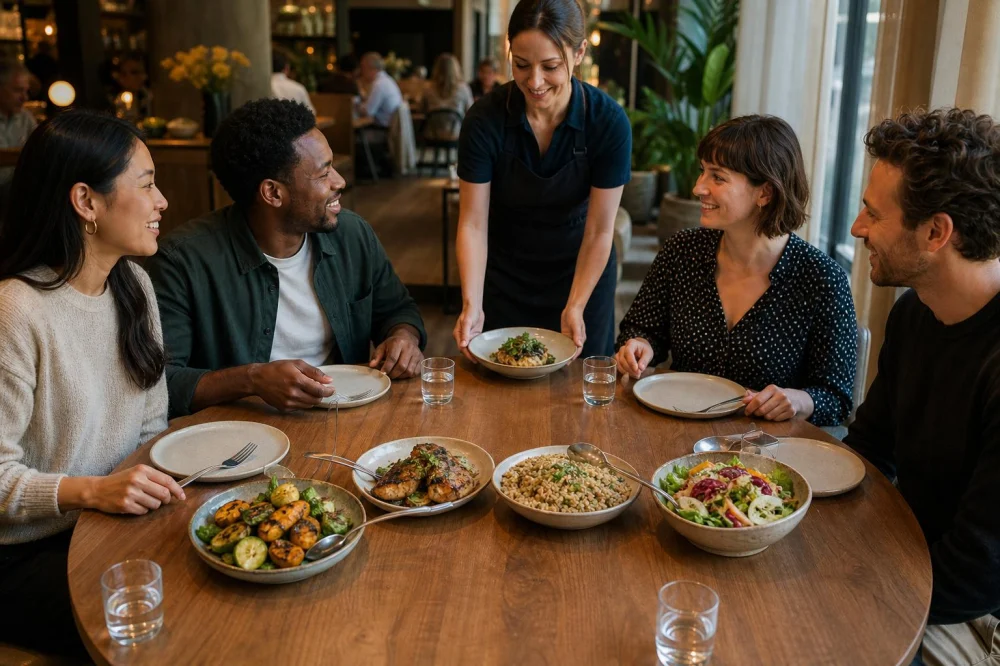
How to Order Shared Plates Without Overordering
In this guide
Shared-plate menus invite a table to explore, but “small” is not a standard unit. One dish may be two bites, another may feed four, and a third may be a full entrée presented for sharing. The simplest way to avoid excess is to ask about portion style, order a balanced first round, and add food after seeing the actual plates.
Quick answer
Tell the server the party size, appetite, dietary needs, and whether the table wants a snack or full dinner. Ask how many people each dish typically gives a taste and whether food arrives all at once or as ready. Begin with fewer plates than the maximum recommendation, including something fresh, something substantial, and one priority dish. Pause after the first round, then order more if the kitchen and reservation time allow.

The Cheesecake Factory
2402 E Camelback Rd Space #101, Phoenix, AZ 85016, USA
Learn what “small plate” means here
Tapas, mezze, dim sum, antipasti, izakaya dishes, family-style platters, tasting portions, and modern small plates have different traditions and serving sizes. Do not apply one universal “two plates per person” formula.
Some menus identify snacks, vegetables, larger plates, sides, and mains. Others place everything in one list. Price is only a rough clue: an expensive dish may use a costly ingredient but still provide few bites.
Ask whether the restaurant intends dishes to be shared, whether plates come individually portioned, and whether there are larger anchor dishes. A clear explanation from staff is more reliable than counting menu categories.
Count diners, appetites, and restrictions
Five people do not necessarily have five equal appetites. Note children, very hungry diners, light eaters, late arrivals, and anyone who will not eat certain dishes. A table where only two people eat seafood needs a different order from one where every plate is available to everyone.
Decide whether the goal is broad tasting or a complete meal. If the group plans dessert or another stop later, order fewer savory plates. If this is the only meal after a long day, include enough starch, protein, and vegetables to satisfy.
For a large group, ask whether the restaurant offers a set sharing menu. It can simplify pacing, but confirm price, substitutions, portioning, and whether every guest must participate.
Start with a measured first round
A practical first round includes one or two dishes the entire table values, a vegetable or bright dish, and something filling. For four adults, that might mean three or four plates if portions are moderate—not a rule, but a starting point to discuss with the server.
Do not order every appealing item at once. Table space, temperature, and attention are limited. Hot food cools, fried food softens, and sauces merge when too many dishes land together.
Make sure the kitchen accepts follow-up orders and ask about closing time. Ordering in rounds works poorly near the final kitchen call or when a dish has a very long preparation time, so place those items early.
Balance rich, fresh, hot, and filling dishes
A satisfying table has contrast. Pair fried or creamy food with herbs, raw or lightly cooked vegetables, acidity, broth, or a crisp salad. Combine soft textures with crunch and mild dishes with one stronger flavor instead of ordering five versions of the same richness.
Choose one or two anchors such as rice, bread, noodles, potatoes, beans, a larger vegetable, fish, or meat according to the cuisine. These help turn a tasting sequence into dinner.
Notice duplicate ingredients and sauces. Several dishes may all contain cheese, chile oil, truffle flavor, tomato, or the same protein even when their names look different. Ask the server where the menu overlaps.
Ask how the kitchen paces food
“As ready” means dishes may arrive in the order the stations complete them, not the sequence printed on the menu. A cold item may precede a grilled plate; two fried dishes may arrive together. If order matters, ask what the kitchen can accommodate.
Some restaurants hold courses and intentionally pace them. Others send food rapidly to keep it at its best. Tell the server if the table needs a slower meal, has a theater deadline, or wants a large plate to arrive after the first snacks.
Keep enough open table space and let staff clear empty plates. Do not request all food simultaneously unless the table can receive and eat it promptly.
Use portion questions that staff can answer
Instead of asking “Is it big?” ask, “Will four people each get a meaningful bite?” or “Is this usually a starter for two or a main for one?” Ask how many pieces come in an order and whether the kitchen can add a piece for an extra charge.
For a whole fish, steak, roast, or market vegetable, ask the approximate weight or typical share range and what accompaniments come with it. Bone, shell, sauce, and garnish affect how much edible food reaches the table.
Staff estimates are approximate. Appetite and plate size vary, so use the answer to choose a starting round, not demand a guaranteed number of bites.
Make shared food easier to divide
Place serving utensils with each dish and use clean share plates. For items with fewer pieces than diners, agree whether to cut them, order another portion, or let interested diners have them. Do not make one person silently divide every dish.
Keep personal utensils out of shared sauces when serving utensils are available. Ask staff to portion a difficult item such as whole fish or a large cut if that service is offered.
Shared dining should not pressure someone to eat an unwanted food or pay equally for costly items they did not share. Discuss premium add-ons and bill division before ordering them.
Keep allergies and dietary needs clear
Shared plates increase cross-contact at the table. Tell the restaurant about medically significant allergies before ordering and ask which dishes and serving arrangements it can manage. A separate safe plate may be better than placing an allergen-containing dish beside it.
Use separate utensils and do not pass food over the protected plate. Sauces, garnishes, bread baskets, shared fryers, and serving spoons can transfer allergens. “Just avoid that dish” may not be sufficient.
Vegetarian, vegan, halal, kosher, gluten-related, and other needs should also be discussed clearly. Decide which dishes are communal and which belong to particular diners so nobody is left with only a garnish.
Plan for leftovers and food safety
Ask whether leftover food can be packaged; some tasting items, raw seafood, buffets, or regulated preparations may not be suitable or permitted for takeout. Do not use a to-go box as the main justification for knowingly excessive ordering.
Refrigerate perishable leftovers promptly. Food should not remain at room temperature for more than two hours, or more than one hour when the temperature is above 90°F (32°C). When travel will be long, use an insulated cooler with ice or skip taking the food.
Label boxes if allergies or dietary ownership matter. Reheat appropriate foods thoroughly and discard leftovers with questionable time, temperature, odor, or handling history.
Frequently asked questions
How many small plates should each person order?
There is no universal count. Ask about this restaurant's portions, begin conservatively, and add a second round.
Is it rude to order more later?
Usually not if the kitchen is open and the format supports it. Tell the server you plan to order in rounds so pacing is clear.
Can a shared-plate restaurant split every dish?
Some can add pieces or portion food; others cannot without changing the preparation. Ask before ordering.
What if dishes arrive too quickly?
Tell the server early, clear space, and ask whether later items can be paced. Food already cooking may not be holdable without harming quality.
Should everyone split the bill equally?
That is a group decision. Discuss it before ordering, especially when alcohol, premium dishes, children, or dietary restrictions create unequal consumption.
Order in rounds and adjust
The best shared order is responsive, not mathematical. Learn the restaurant's portion style, count who can eat each dish, build contrast, and begin with a measured round. Ask specific portion and pacing questions, protect allergy needs, then add food after the table sees its real appetite. That approach creates variety without turning abundance into waste.



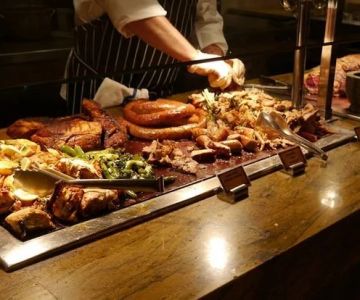
 Wendy's3.0 (1428 reviews)
 George's Kitchen4.0 (533 reviews)
 Kiss Pollos Estilo Sinaloa4.0 (61 reviews)
 Taco Boy's4.0 (3877 reviews)
 ATL wings4.0 (421 reviews)
 Los Politos Mexican Food4.0 (261 reviews)
 The Best Sushi Spots in New York City You Can’t Afford to Miss
 Top 5 Best Pizza Places in Los Angeles for a True Pizza Experience
 A Guide to the Best Dim Sum Restaurants in New York City
 Top Food Trends in the US That Will Dominate 2026
 Popular Choices for Breakfast Spots Across the US
 Exploring Vegan Dining: The Best Plant-Based Restaurants Near Me