
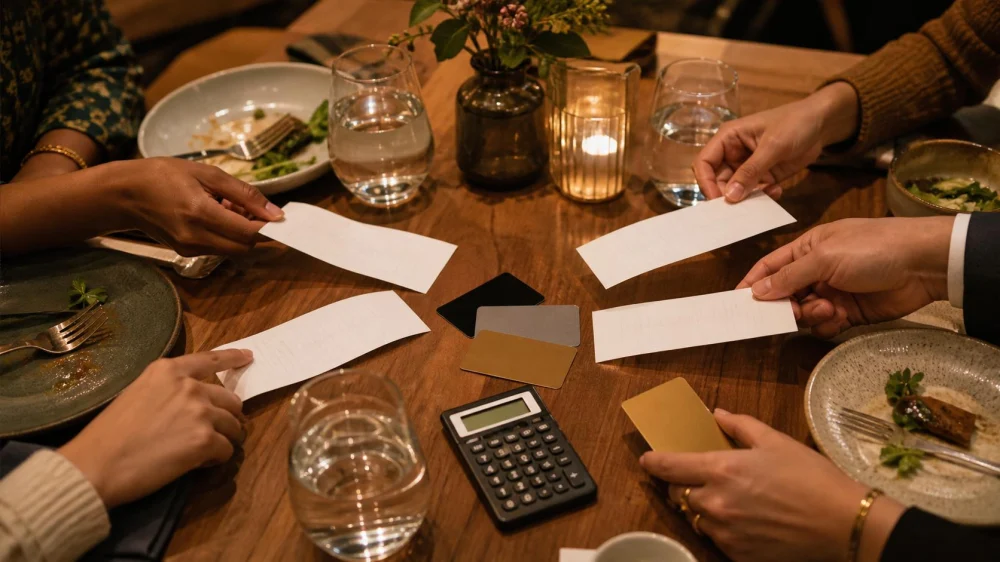
Restaurant Split Check: Confirm the Payment Plan Early
Table of contents
A restaurant split check can make a group meal feel simple—or turn the last ten minutes into a confusing accounting exercise. The smoothest approach is to agree on a payment plan before ordering and confirm that the restaurant can support it. Some point-of-sale systems can separate every item by seat, while others limit the number of cards, require equal splits, or keep large-party orders on one check. Policies may also change during busy periods or for private dining.
A clear plan respects both the group and the service team. It reduces disputed items, missing tax, and accidental under-tipping. The goal is not to calculate every penny at the table unless the group wants that level of detail. It is to choose a method everyone understands, tell the server early, and verify the final receipts before leaving.

Why split-check policies vary
Restaurants use different ordering and payment systems. One may assign items to individual seats from the start, while another records everything on a single table account. Splitting a check after many shared dishes, seat changes, and drink rounds can require the server to manually move dozens of entries. A venue may therefore limit separate checks or cards, especially for a large table.
Card-processing rules, minimum charges, service charges, and event contracts can also influence the options. A private room may require one payer even when the main dining room normally allows separate checks. A prix fixe menu may be easy to divide equally but difficult to separate when guests add beverages and supplements. Never assume that a practice you encountered on a previous visit still applies; ask about the current policy for this reservation.
Ask before the group orders
For an ordinary small group, ask the server when everyone is seated: “Can we have separate checks, and is there a limit?” For a large party, call before the reservation and have the policy added to the booking notes. Confirm whether the restaurant can divide by seat, accept multiple cards on one bill, or split the total evenly. Also ask whether cash and cards can be combined.
If the restaurant requires one check, tell the group before food is ordered. That gives everyone time to choose a payer and a reimbursement method. Do not wait until the bill arrives to discover that several guests cannot use the selected payment app or that a company expense policy requires an itemized receipt. Business diners should confirm receipt needs in advance, including whether individual itemization is necessary.
Choose a fair splitting method
Separate checks by seat are useful when guests order individually and the restaurant supports the process. Equal splitting is faster when orders are similar and everyone agrees. Item-by-item calculation may feel fairer when prices vary greatly, but it requires a plan for shared appetizers, bottles, desserts, tax, and tip. Choose the method before ordering rather than debating fairness at the end.
For shared dishes, decide whether all diners share the cost or only those who participate. If one person is not drinking alcohol, the group may choose to separate beverage costs. There is no universal correct formula; the important point is informed agreement. If exact calculations would make the gathering uncomfortable, one person can pay and send a transparent summary afterward, provided the payer is willing and the group knows when reimbursement is expected.
Keep accessibility in mind. Not everyone has a smartphone, a payment app, mobile data, or comfort with digital transfers. Offer a card or cash option when possible. Avoid pressuring anyone to reveal personal financial information to the group. A simple, private conversation with the organizer can resolve special arrangements.
Make the request easier to handle
Tell the server the split method before the first order. If checks are organized by seat, avoid switching places without mentioning it. When ordering a round for someone else or adding a shared plate, state which check should receive the item. One group member can act as the point person so the server does not receive conflicting directions.
Near the end of the meal, request checks before the group is under time pressure. Review them quietly and identify specific corrections, such as “the sparkling water belongs on seat four,” instead of handing back a pile of receipts with a general complaint. If the restaurant can only process a limited number of cards, consolidate payments within the group rather than repeatedly asking for exceptions.
Do not write card numbers, security codes, or other sensitive information in a group message. Hand payment directly to the server or use the restaurant’s approved terminal. Keep your card in view when practical, and retrieve it promptly. If a payment link or QR code is offered, confirm it belongs to the restaurant before entering information.
Account for fees, tax, and gratuity
Splitting menu prices alone will not equal the final bill. Sales tax, service charges, delivery or venue fees, and gratuity may apply. Read the menu and receipt labels, and ask the restaurant to explain an unfamiliar charge. A service charge is not automatically the same as a voluntary tip in every restaurant or jurisdiction. If you are unsure how it is distributed or whether additional gratuity is expected, ask a manager or server without making assumptions.
When one person pays and others reimburse, divide the complete amount using the agreed method. If calculating by item, allocate tax and applicable charges consistently. Make sure the combined tips on separate receipts reflect the service the group intends to recognize. Watch for automatic gratuity on large parties so the group does not add another amount unintentionally—unless it knowingly wishes to do so.
Local rules and restaurant disclosures vary, so treat the printed receipt and current restaurant explanation as the source for that transaction. If a charge seems inconsistent with the disclosed terms, request clarification before paying. Keep the conversation factual and give staff time to check the system.
Plan for large groups and events
Designate an organizer for birthdays, team dinners, and family gatherings. The organizer should confirm the reservation size, menu structure, deposit, cancellation terms, check policy, card limit, automatic charges, and final payment deadline. Share a short summary with guests before the event. If the party has a spending cap, explain what the host covers and what guests buy themselves.
Private dining agreements deserve special attention. The contract may include a food-and-beverage minimum, room fee, tax, administrative fee, service charge, or gratuity. Ask for an estimated total rather than comparing menu prices alone. Confirm whether the deposit is credited to the final bill and which payment methods are accepted. Material contract questions should be resolved with the restaurant before the event, not interpreted at the table.
For a group with changing attendance, ask when the guaranteed guest count is due. A no-show may still affect a prix fixe charge or minimum. Keep the host informed about cancellations, but do not promise that the restaurant will remove charges outside its stated terms.
Handle declined cards and payment errors
A declined card can happen for many reasons and should be handled discreetly. The cardholder can try another approved method or contact the issuer privately. Do not repeatedly retry a card if the restaurant advises against it, because duplicate pending authorizations can be confusing. If another guest covers the amount, record the reimbursement clearly.
If a card appears to be charged twice, first check whether one entry is a temporary authorization and the other is the final charge. Save the itemized receipt and card slips, then contact the restaurant with the date, amount, and last four digits if needed. Do not send full card details by ordinary email or text. If the issue remains unresolved, follow the card issuer’s dispute process and deadlines.
When a receipt contains the wrong item, ask for a corrected itemized copy before leaving. Confirm whether the original card authorization was voided and retain both records until pending transactions settle. Staff may need a manager to correct the check; allowing a few minutes is safer than trying to reconstruct the transaction later.
Check every receipt before leaving
Match food and drinks to the correct check, verify the number of payments, read all fee and gratuity lines, and confirm the total before signing. Each payer should take an itemized receipt or a clear digital copy. The organizer can check that no remaining balance is left on the table account. If cash is used, wait for change or clearly state when it is intended as gratuity.
A successful split check begins well before the bill folder arrives. Confirm the restaurant’s capability, agree on a fair method, keep orders organized, and account for the entire total. With those decisions made early, the group can finish the meal focused on the experience rather than a last-minute payment puzzle.




 La Carreta de Lily3.0 (104 reviews)
 Pho Thuan Thanh on Northern4.0 (136 reviews)
 Casa Reynoso4.0 (1781 reviews)
 A-1 Pizza & Wings4.0 (832 reviews)
 Super Oscars Mexican Food4.0 (982 reviews)
 Filiberto's Mexican Food3.0 (1137 reviews)
 Where to Find the Best Pasta in Los Angeles: A True Italian Experience
 Where to Find the Best Sushi in Seattle: A Guide to Top Sushi Spots
 Why You Should Try the Best French Cuisine Restaurants in San Francisco
 Restaurant Payment Policy: Confirm Cash, Cards, and Fees
 The Secrets to a Perfectly Crafted Cocktail: Best Cocktail Bars Near Me
 Where to Find the Best Vegan Restaurants in New York City