
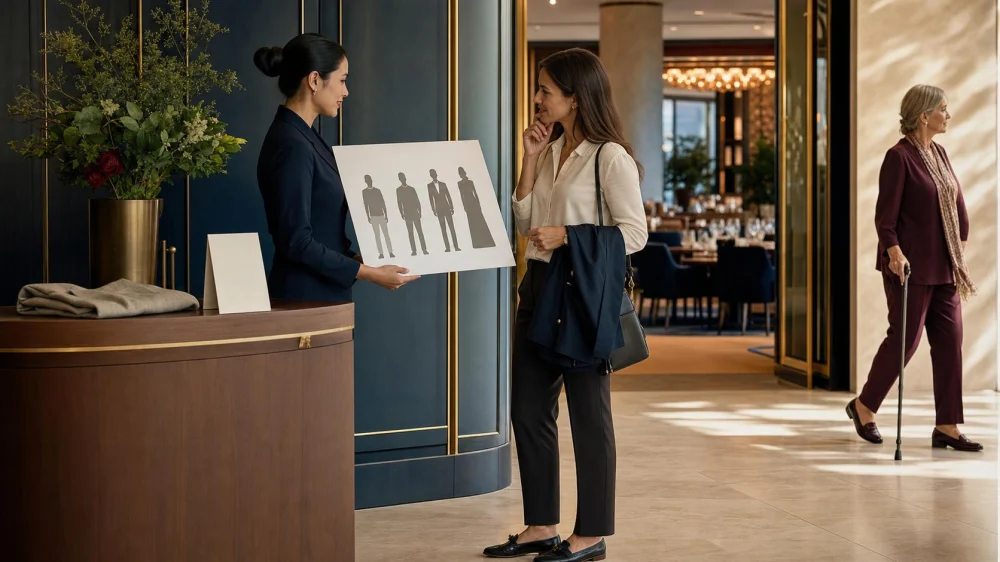
Restaurant Dress Code Guide: Confirm What to Wear Before You Go
On this page
- Quick answer
- Understand common dress-code terms
- Check the restaurant’s own information
- Ask specific questions
- Consider day, time, and dining area
- Plan for weather and outdoor seating
- Discuss accessibility and required items
- Plan for children and groups
- Prepare while traveling
- Handle concerns at arrival
- Respect culture without stereotyping
- Carry a simple backup
- Dress-code checklist
- Frequently asked questions
- Next steps
Quick answer
Check the restaurant’s official reservation page, confirmation, website, or direct message for its current dress code. Terms such as casual, smart casual, business casual, resort casual, cocktail, jacket preferred, and formal are not standardized, so ask what the restaurant specifically restricts.
Confirm shoes, shorts, athletic wear, hats, denim, logos, outerwear, and whether rules differ by dining room, bar, rooftop, private event, or time. Mention required medical, religious, cultural, sensory, mobility, or work-related clothing privately when relevant. If uncertain, choose clean, neat clothing and closed or polished shoes appropriate to the venue, then carry one easy layer that can dress the outfit up.
Understand common dress-code terms
Casual usually allows everyday clothing, but it does not necessarily mean beachwear, sleepwear, or work clothes. Smart casual generally adds polish through fit, condition, and intentional styling.
Business casual can mean collared shirts, blouses, sweaters, trousers, skirts, dresses, clean dark denim, and neat shoes, but expectations vary.
Cocktail and formal codes usually call for elevated evening clothing. “Jacket preferred” differs from “jacket required.” A tie may be optional even when a jacket is expected.
Resort casual can permit lighter fabrics and colors while still excluding swimwear and flip-flops. Ask the actual venue because climate and property style influence the term.
Check the restaurant’s own information
Use current official sources. Old reviews, photos, travel forums, and social posts may reflect a different policy, event, owner, or dining room.
Read the reservation confirmation and reminder. Dress expectations may appear under policies with age limits, deposits, photography, or seating information.
Check whether the reservation is for the main dining room, lounge, patio, chef’s counter, club, hotel restaurant, or private function.
If official sources conflict, contact the restaurant and save the response. Do not rely on what another diner wore without knowing their circumstances.
Ask specific questions
Instead of asking, “Is it fancy?” say what you plan to wear: clean dark jeans, tailored shorts, sneakers, a sleeveless top, religious headwear, work boots, or a jacket.
Ask whether “no athletic wear” includes fashion sneakers, golf clothing, leggings, team jerseys, running shoes, or sweatshirts.
Clarify hat policy and whether religious, cultural, or medical head coverings are treated differently. Ask privately and respectfully.
Record the employee’s guidance and date. Policies can change for holidays, events, and buyouts.
Consider day, time, and dining area
Brunch, lunch, happy hour, and dinner can have different atmosphere or rules. A rooftop may be relaxed in the afternoon and more formal at night.
Private events can set a host’s dress code beyond the restaurant’s normal policy. Follow the invitation and contact the host about uncertainty.
Bars, clubs, casinos, and hotel properties may have separate security or footwear requirements after a certain hour.
Do not assume an outdoor table eliminates the code. The same entrance and common areas may apply.
Plan for weather and outdoor seating
Bring a light layer for air conditioning, wind, rooftop exposure, or a cool patio. Ask whether heaters or shade are operating.
Choose shoes that can handle rain, gravel, stairs, cobblestones, docks, lawns, or rooftop surfaces without becoming unsafe.
Use a coat check when available, but keep valuables under your control. Confirm whether large umbrellas or wet outerwear have designated storage.
A weather backup may move patio diners into a room with different atmosphere but should not unexpectedly change required attire without notice.
Discuss accessibility and required items
Medical shoes, compression garments, braces, prosthetics, mobility equipment, sensory-friendly clothing, and other necessary items may not match a generic dress description.
Contact the restaurant before the visit and explain the accommodation needed in functional terms. Ask for a discreet note on the reservation.
Religious and cultural clothing should be addressed respectfully. Do not ask a guest to remove an item based on a casual assumption about the venue.
Service-animal equipment and mobility aids are not fashion accessories. Discuss seating space and access separately from dress.
Plan for children and groups
Ask whether the code applies to children and teenagers and whether age affects jacket, shoe, or formalwear expectations.
Tell the whole group the exact guidance, not just “dress nice.” One person’s interpretation can differ widely.
For a celebration, distinguish the host’s desired theme from the restaurant’s enforceable policy. Guests should know which is optional.
Do not shame a guest publicly. Resolve uncertainty privately before arrival.
Prepare while traveling
Pack one versatile outfit that can move from casual to smart casual with a jacket, cardigan, scarf, jewelry, belt, or shoe change.
Use wrinkle-resistant fabrics and store shoes separately. A small stain-removal cloth, lint roller, and garment steamer used safely can help.
Do not travel with valuable formalwear unsecured. Confirm hotel pressing, storage, and timing before relying on it.
If luggage is delayed, call the restaurant. It may offer guidance, move the reservation, or recommend nearby options.
Handle concerns at arrival
If staff raises a dress concern, stay calm and ask which specific item conflicts with the policy and what options exist.
The venue may offer a loaner jacket, alternate seating, time to change, or rescheduling. Accepting an option is usually faster than arguing at the host stand.
If you received prior approval, show the saved message discreetly. Do not photograph staff or other guests without permission.
Ask for a manager if the issue involves an accommodation, inconsistent information, or respectful application of the policy.
Respect culture without stereotyping
A restaurant serving a particular cuisine does not automatically require traditional clothing. Wear cultural garments only when they are yours, invited, or chosen with informed respect.
Do not treat dress from another culture as a costume or theme accessory. Avoid caricatures and novelty items.
The restaurant’s formality comes from service and venue style, not from broad assumptions about a country or cuisine.
Ask the host for event-specific guidance when traditional or ceremonial dress is relevant.
Carry a simple backup
A lightweight jacket, cardigan, scarf, clean overshirt, or alternative pair of compact shoes can change the level of formality.
Keep the backup clean and accessible, not buried in valet luggage. Avoid carrying a large garment bag into a small dining room without asking.
Do not use a backup to hide unsafe or prohibited footwear. Comfort and stable movement still matter.
If the code is strict and the meal is important, change before arriving rather than relying on a last-minute fix.
Dress-code checklist
- Check current official reservation and venue information.
- Confirm the exact dining area, time, and event.
- Ask about shoes, shorts, denim, hats, and athletic wear.
- Distinguish preferred from required items.
- Discuss necessary accessibility or cultural clothing privately.
- Tell every group member the same specific guidance.
- Plan layers and footwear for weather and surfaces.
- Pack one easy backup item.
- Save written guidance if the policy is unclear.
- Resolve concerns calmly with the host or manager.
Frequently asked questions
Are jeans acceptable at a smart-casual restaurant?
Sometimes. Clean dark denim may be accepted while distressed or very casual denim is not. Ask the restaurant.
Does jacket preferred mean required?
No, but it signals the venue’s desired formality. Confirm whether entry or seating depends on wearing one.
Can I wear sneakers?
Policies vary among athletic, fashion, clean leather, and performance shoes. Describe the pair rather than asking only about “sneakers.”
What if I need medical footwear?
Contact the restaurant before arrival and request a discreet accommodation note. Necessary safe footwear should be discussed separately from fashion.
Do children follow the same code?
Not always. Ask for age-specific guidance, especially for jackets, formal shoes, and evening service.
Next steps
Check the restaurant’s current official policy, identify the dining area and time, and ask about the exact items you plan to wear. Share the answer with the group, choose safe polished clothing, and bring one simple backup layer.
This guide provides general dining planning. Restaurant policies, accommodations, event codes, and venue expectations vary.
 Cielo Rojo4.0 (230 reviews)
 Carl’s Jr.3.0 (1832 reviews)
 Viet Shack4.0 (362 reviews)
 Port of Subs4.0 (163 reviews)
 Tempe Tavern4.0 (1110 reviews)
 Rosati's Pizza3.0 (596 reviews)
 How to Find the Best Japanese Restaurants in Your City | Top Tips for Finding Authentic Sushi & More
 Ultimate Guide to Weekend Brunch in America: Top Spots and Tips
 How to Find the Best Tapas Bars in San Francisco for a Flavorful Meal
 Top 5 Best Taco Joints in Los Angeles for Flavorful Tacos
 Why You Should Try the Best Italian Dishes in Your City – Discover Top Italian Restaurants
 Top 10 Best Sushi Restaurants in Miami That Will Blow Your Mind