
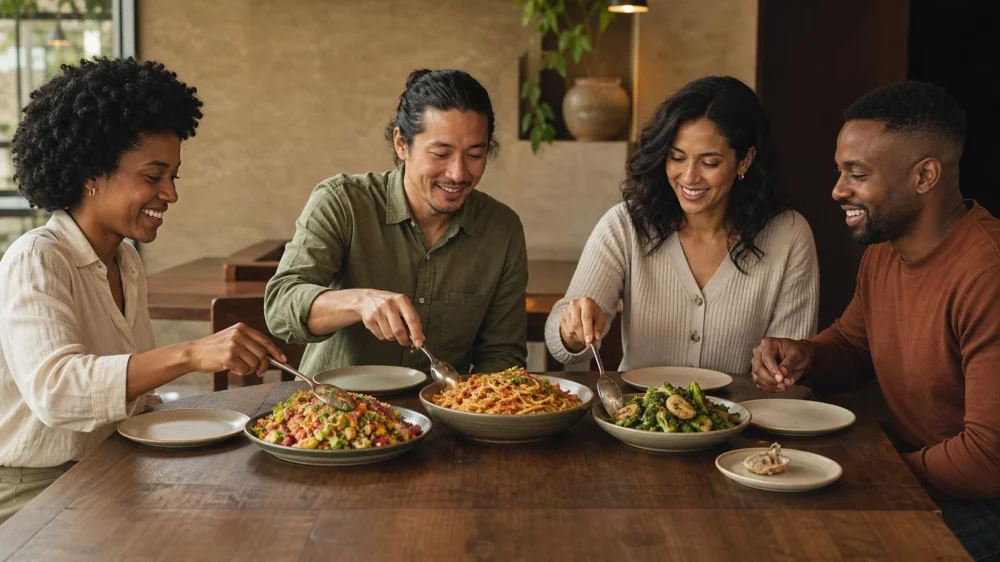
Restaurant Shared Plates: Portions, Serving Tools, and Fees
On this page
Quick answer
Tell the server that the table plans to share and ask how many people each dish usually serves, whether courses arrive together or in sequence, and whether split-plate or extra-place-setting fees apply. Identify allergies before ordering and avoid shared dishes when the kitchen or table cannot manage cross-contact. Request serving utensils and waste plates as needed, pace the order, and agree on leftovers before food is packed.

Why sharing changes both the order and table service
A menu portion may be designed for one diner, a tasting bite, or family-style service, and plate size alone can mislead. Shared dishes also need room, serving tools, an order for reaching the table, and a plan for bones, shells, sauces, and dietary restrictions. The best total quantity depends on appetite, course count, richness, and how evenly items can be divided.
This guide is for United States diners planning ordinary shared plates, family-style dishes, or a mixed table order. It is not an allergy guarantee, nutrition calculation, etiquette rule, or food-safety certification. Restaurant portions, service style, charges, kitchen practices, and accessibility support vary.
Practical checklist
- Number of diners, children, appetites, dietary needs, allergies, foods not shared, arrival times, seating layout, mobility, reach, and assistance needs.
- Dish portion or count, bone or shell weight, sauce amount, richness, starch, vegetables, protein, tasting size, family size, and expected leftovers.
- Course sequence, all-at-once service, kitchen pacing, hot and cold items, table space, warming limits, and dishes that should be eaten immediately.
- Serving spoons, tongs, ladles, knives, shared sauces, individual side plates, bowls, chopsticks, napkins, shell or bone plates, and hand-cleaning needs.
- Allergens in each dish and garnish, kitchen cross-contact, shared fryer or grill, table utensils, double dipping, buffet-style passing, and individual safe meals.
- Split-plate, extra-setting, cake, corkage, family-style, large-party, service, gratuity, minimum-spend, and substitution charges plus tax.
- Leftover ownership, separate containers, allergen labeling, sauces, refrigeration timing, transport, hotel or travel limits, and final bill allocation.
Step-by-step plan
- Ask whether the restaurant supports sharing and how it describes portion count, service style, pacing, table space, extra settings, and associated fees.
- Identify allergies and dietary restrictions before selecting common dishes, then decide which diners need separate food and dedicated utensils.
- Build a balanced first round using realistic portions and the server's guidance, leaving room to add dishes rather than overcrowding the table.
- Choose a course sequence and ask for appropriate serving tools, side plates, bowls, and waste dishes before hot or messy food arrives.
- Serve onto individual plates instead of eating from common dishes when hygiene or allergen separation matters, and keep dedicated utensils with safe items.
- Pause after the first round to assess portions, appetite, remaining courses, kitchen closing time, and whether another dish will arrive soon enough.
- Before packing, agree who takes which leftovers, request separate containers when needed, note allergens, review fees, and confirm the final payment plan.
For a planned group meal, note the guest count, allergies and separate meals, portion guidance, selected dishes, course sequence, serving tools, fees, service charge, substitutions, leftovers, and payment allocation. Save the reservation notes and itemized receipt when the order or charges are complex.
Limits and important notes
Do not assume a shared kitchen can make a common platter safe for every allergy, use one utensil across incompatible dishes, pressure someone to share, or reach across hot equipment. Removing garnish at the table does not remove cross-contact. A family-style label does not guarantee a fixed number of servings.
Ask the server or manager immediately for missing allergy separation, mislabeled food, an unexpected charge, dangerously hot or unstable servingware, or a dish inconsistent with the confirmed order. For possible allergic symptoms, stop eating, follow the person's emergency plan, and seek emergency help for breathing difficulty, throat swelling, faintness, or another severe reaction.
Frequently asked questions
How many shared dishes should a group order?
There is no universal number. Use portion guidance, guest appetite, course count, richness, starch, vegetables, and the option to add later.
Can a restaurant charge for sharing?
Some venues charge split-plate, extra-setting, or family-style fees. Ask before ordering and check the itemized bill.
Is sharing safe for a food allergy?
It depends on kitchen and table cross-contact. A separate verified dish and dedicated utensils may be safer when the restaurant can support them.
Should every dish arrive at once?
Not necessarily. Sequencing can protect temperature, table space, and pace. Ask how the kitchen normally serves the chosen dishes.
Who gets the leftovers?
Agree before packing, separate incompatible foods or allergens when needed, and label containers so the handoff is clear.
Sources and evidence
Use the restaurant's current menu and staff for portion guidance, ingredients, allergens, shared-equipment practices, service style, fees, and leftover policy. For allergy decisions, follow the diner's clinician-provided plan and verified kitchen information; generic sharing advice cannot certify a table or dish.
Conclusion and next steps
Tell the server the group will share, identify allergies and separate meals, confirm portions, pacing, tools, fees, and table space, then start with a balanced order that can be expanded. Use dedicated utensils where needed, review charges, and divide and chill leftovers promptly under current food-safety guidance.



 YOYOPOLLO5.0 (5 reviews)
 Cervantes Restaurant3.0 (61 reviews)
 La Carreta De Lily4.0 (452 reviews)
 Burger King3.0 (624 reviews)
 McDonald's3.0 (3371 reviews)
 The Market At Taylor Place5.0 (5 reviews)
 Why You Should Try the Best Poke Bowls in Your City
 How Restaurants Are Creating Instagram-Worthy Food Presentations
 Looking for Seafood Restaurants Near Me? Try These Top Dining Ideas
 The Best Farm-to-Table Restaurants in Los Angeles for a Fresh Experience
 Why Restaurant Tasting Menus Are So Popular With Foodies
 The Best Vegetarian Restaurants in Los Angeles You Shouldn't Miss