Restaurant Buffet Guide: Price, Plates, Utensils, and Timing
On this page
Quick answer
Before a restaurant buffet, confirm the per-person price, included drinks, time limit, child pricing, and whether leftovers or takeout are prohibited. Wash hands, use a clean plate for every trip, keep each serving utensil with its dish, and choose hot food that is hot and cold food that is chilled. Ask staff rather than moving or tasting questionable food.

Confirm price and service terms
Buffet prices can change by weekday, meal period, holiday, or seafood and premium offerings. Ask whether tax, service charge, beverages, desserts, and special stations are included. Confirm the child age or height rule, senior price, reservation deposit, seating time, and last refill or closing time.
Most all-you-can-eat terms apply to one diner during one visit and prohibit sharing or packing leftovers. Food-waste charges may apply at some restaurants. Read posted rules before serving. If a diner wants only a small amount, compare buffet price with an à la carte option rather than assuming the buffet is better value.
Survey before filling a plate
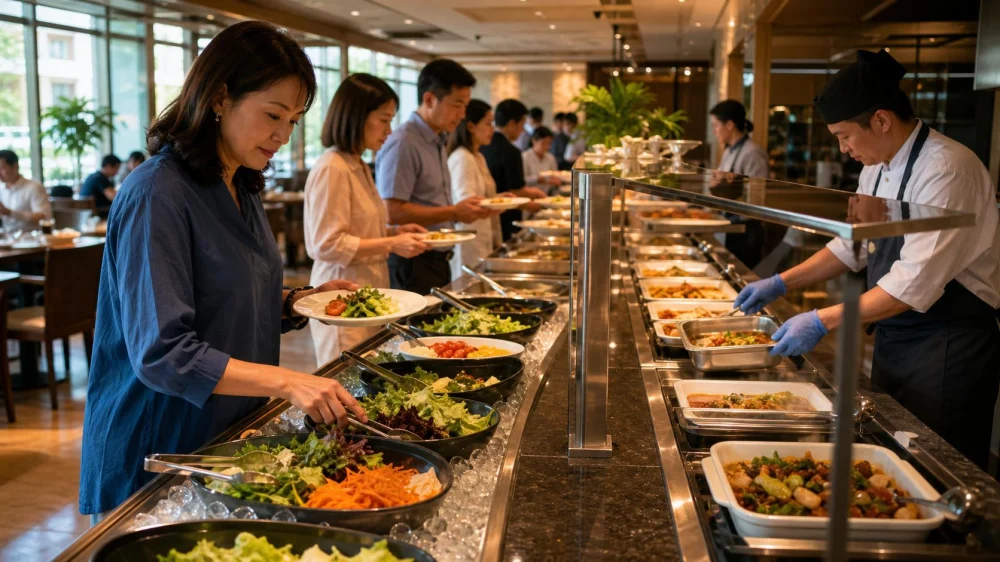
Walk the line once and identify salads, soups, cooked dishes, carving station, sauces, raw or cook-to-order items, desserts, and drinks. Note one-way flow and queue locations. A quick survey prevents an overloaded plate and helps separate foods with different flavours or allergen concerns.
Look for clean guards, stable serving dishes, dedicated utensils, and staff replacing or maintaining food. Do not reach under a sneeze guard or move labels and spoons between pans. If an item is empty, ask staff rather than scraping residue or taking from a replacement tray before it is placed.
Use clean plates and utensils
Wash hands before eating and after the restroom, coughing, handling a phone, or assisting a child. Use a new clean plate for every return to the buffet. Do not bring a used plate back into the service line or let personal utensils touch shared food.
Use the utensil assigned to each dish and return it to its holder. Do not use fingers, sample from the spoon, or switch tongs between foods. Help children only when you can keep them from touching food and equipment. Tell staff promptly when a utensil falls, a spill occurs, or a guest contacts food directly.
Notice temperature and turnover
FoodSafety.gov advises choosing hot buffet food that is steaming and cold food that is chilled. Avoid lukewarm items. Chafing dishes and cold wells are holding systems, not visual guarantees; restaurant staff monitor them. Ask an employee when a dish appears unheated, dried out, melted, or recently disturbed.
Prefer smaller, freshly replaced pans and active turnover. Do not combine the last portion of an old pan with a newly delivered one yourself. At outdoor buffets, heat, insects, wind, and direct sun add concerns. Keep lids and guards in their intended position and return to your seat rather than lingering with a plate.
Ask about allergens
Buffets present extra cross-contact risk because guests can swap utensils, spill toppings, or touch multiple dishes. Speak with a manager or designated staff member before serving. Ask about recipes, shared fryers, carving tools, sauces, garnishes, labels, and whether a separately prepared meal is safer.
Do not rely on appearance or a label alone. A plain vegetable may contain butter or stock, and a sauce can contain nuts, sesame, dairy, soy, wheat, fish, or shellfish. If the restaurant cannot manage a serious allergy safely at the buffet, choose an alternative meal or location rather than removing visible ingredients.
Build smaller rounds
Start with small portions of foods you expect to finish. Keep raw, cooked, cold, and sauce-heavy items separated when practical. A clean plate for each round also prevents sauce from mixing with a new dish. Allow time between rounds instead of stacking food high.
Return unwanted or partially eaten food only to your table, never to the buffet. Follow the restaurant’s waste and cleanup process. Do not pack buffet leftovers unless staff explicitly permits it and provides suitable containers. Food held at the table has a different time and temperature history from fresh service.
Frequently asked questions
Can I reuse the same plate?
Use a clean plate for each trip. This reduces transfer from personal utensils, hands, saliva, and table surfaces back to the buffet line.
What should I do if a serving spoon is in the wrong dish?
Do not move it to another pan. Tell staff so they can replace utensils and assess possible cross-contact.
Can I take buffet food home?
Usually not unless the restaurant specifically allows it. Confirm terms before serving and use only containers the restaurant provides or approves.
Sources and limitations
FoodSafety.gov dining guidance recommends handwashing, hot food that is hot, and cold food that is chilled. The FDA’s buffet safety guidance supports hot and cold holding, small fresh replacement dishes, clean utensils, and prompt chilling. Restaurant controls and local food codes govern a specific buffet.
Conclusion and next steps
Confirm price and timing, survey the line, wash hands, and use a fresh plate on every trip. Keep serving tools with their dishes, choose food at proper serving temperature, and ask staff about anything questionable. For allergies, arrange a plan before touching the buffet.




 Life Cafe5.0 (1 reviews)
 GreekTown Restaurant4.0 (946 reviews)
 Good China Restaurant4.0 (474 reviews)
 Over Easy4.0 (285 reviews)
 El Portal4.0 (244 reviews)
 Authentic EthioAfrican Kitchen, Bar & Cafe4.0 (652 reviews)
 Why You Should Try the Best French Cuisine Restaurants in San Francisco
 Where to Find the Best Ice Cream Parlor in Chicago for Sweet Treats
 Where to Find the Best Craft Cocktails in Portland
 Unique Outdoor Dining Spots Across America You Should Visit
 25 Trending Restaurant Desserts That Are Taking Over Social Media
 Where to Find the Best Ramen in Portland for an Authentic Experience