Restaurant Child Seating: Ask About High Chairs Before You Go
Table of Contents
Quick answer
Call the restaurant before leaving and ask whether high chairs or booster seats are available, whether they can be reserved, and whether your stroller can fit without blocking a walkway. On arrival, inspect the seat and restraints, position it away from traffic and hot items, and keep the child within arm's reach. Bring an age-appropriate backup only if the restaurant permits it.
What to ask before visiting
Online listings rarely describe the exact number, style, or condition of child seats. A brief call close to the visit can prevent surprises. Explain the child's approximate age and the type of seat you need without assuming staff can guarantee availability during a busy service.
- Do you have high chairs, booster seats, or both?
- Are they first-come, first-served or linked to reservations?
- Can the chosen table safely accommodate the seat?
- Is there room to store a folded stroller?
- Are steps, narrow aisles, patios, or fixed booths relevant?
- May families bring a portable seat, and are there table restrictions?
Availability can change before arrival. Treat the response as planning information, confirm again at check-in, and avoid asking staff to improvise with stacked chairs or other furniture.
Check the seat on arrival
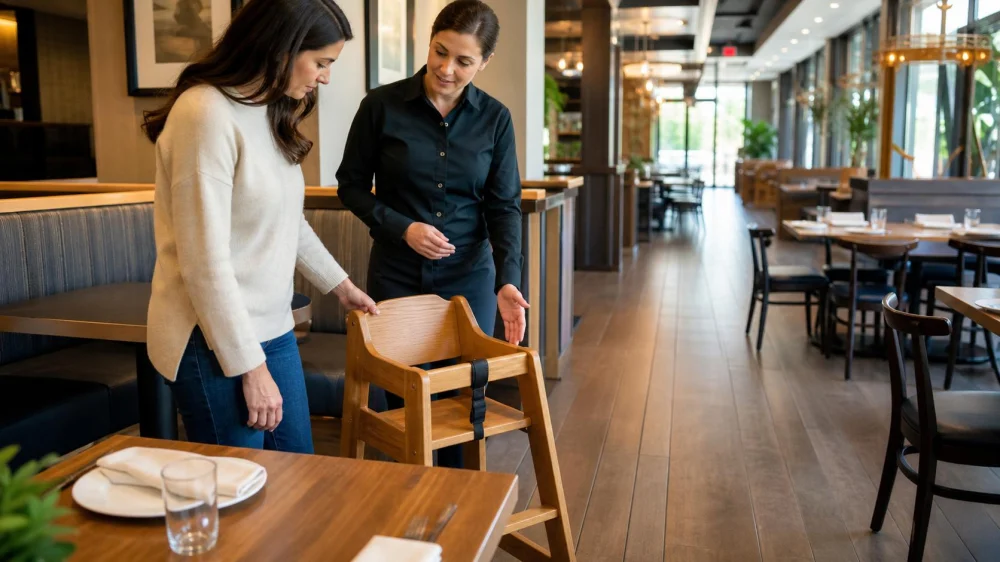
Before placing the child in the seat, look at its stability, straps, buckles, tray, and contact points. The seat should stand evenly and should not wobble, fold unexpectedly, expose sharp edges, or show cracked parts. If a restraint is supplied, it should be intact and used as designed.
Ask for another seat if anything appears damaged, sticky, loose, or unsuitable. Do not repair restaurant equipment, tie on an improvised restraint, or place a carrier on a chair unless both products and the restaurant explicitly allow that setup. Follow the child-seat manufacturer's age, size, and use limits when they are known.
Choose a workable table location
A good table position leaves servers and other guests a clear path. Keep the child away from swinging doors, kitchen traffic, stairs, heaters, cords, decorative flames, and places where hot plates pass overhead. Confirm the seat does not project into an aisle or emergency route.
Check the reach zone from the child's position. Move hot drinks, cutlery, breakable dishes, condiments, tablecloth edges, and serving stands well beyond reach. A high chair should not be pushed against a pedestal or table edge in a way that lets the child brace and tip it.
Use the seat with active supervision
Restaurant noise and conversation can divide attention, so decide which adult is actively watching during seating, ordering, and payment transitions. Use the provided restraint correctly and keep the child seated as intended. Do not allow standing, climbing, rocking, or another child to push the seat.
Hot food can arrive suddenly. Tell the server where the child is seated and ask that hot dishes and drinks be placed out of reach. Test food temperature appropriately, cut foods to a suitable size, and follow the child's established feeding guidance. A restaurant seat does not replace close supervision.
Handle cleaning practically
Restaurants follow their own cleaning process, but families can still inspect the food-contact area. If the tray or seat needs attention, ask staff to clean it rather than spraying an unknown product while the child is present. Allow cleaned surfaces to dry according to the product instructions.
If you bring a wipe, use it only on compatible surfaces and keep it away from food until the area is dry. Never mix cleaning products. Wash or sanitize hands before feeding, and place dropped utensils aside rather than returning them directly to the table.
Bring a realistic backup plan
A backup may be a stroller approved for seated use, a manufacturer-approved portable booster, takeout, or choosing another restaurant. Any portable seat must fit the child's current size and attach only to a table or chair type allowed by its instructions. Restaurant staff may decline it because of furniture, aisle, insurance, or local safety requirements.
Do not place an infant car seat on an inverted high chair, tabletop, booth ledge, or ordinary dining chair. If no safe seating arrangement is available, changing plans is the practical choice.
Talk with staff clearly
At check-in, say what equipment you need and mention a stroller before the table is assigned. If the proposed arrangement blocks an aisle or feels unstable, explain the specific concern and ask about another table or service option. Staff may know which sections have more space or which tables accept a booster safely.
Before leaving, collect straps, toys, cups, and bags, then check beneath the table. Fold the stroller only in an appropriate area and return restaurant equipment where staff requests it.
Family dining checklist
- Call to confirm seat type, availability, and stroller policy.
- Pack only age-appropriate equipment and feeding supplies.
- Inspect the restaurant seat before use.
- Choose a clear location away from heat and traffic.
- Move hot, sharp, and breakable items out of reach.
- Use restraints as designed and supervise continuously.
- Ask staff to replace damaged or dirty equipment.
- Switch to the backup plan if no safe setup is available.
FAQ
Can a restaurant reserve a high chair?
Policies vary. Some note the request but cannot guarantee equipment until arrival. Ask how the restaurant handles it and reconfirm at check-in.
Is a booster seat the same as a high chair?
No. They support different seating stages and attach or stand differently. Use only a seat appropriate for the child's development, size, and the manufacturer's limits.
Can I leave a stroller open beside the table?
Only if staff approves and it does not block service or emergency access. Wheel locks and supervision are still necessary.
What if the only available high chair is damaged?
Do not use it. Ask for a replacement, use a permitted safe backup, order takeout, or choose another venue.
Next steps
Add child seating to the reservation conversation, arrive with enough time to inspect the setup, and keep a flexible alternative. The key decision is simple: use equipment only when it is appropriate, intact, stable, correctly positioned, and actively supervised.
Evidence note: This article gives conservative planning guidance, not product-specific instructions. The child-seat manufacturer's directions, restaurant policy, and applicable safety requirements take priority.
 Sushi Tokoro4.0 (810 reviews)
 Aldo's Hot Wings4.0 (412 reviews)
 McDonald's3.0 (1910 reviews)
 Maskadores Taco Shop and Bar4.0 (815 reviews)
 McDonald's3.0 (1934 reviews)
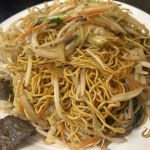 Chef 7 Chinese Food4.0 (121 reviews)
 Why You Should Try the Best Italian Dishes in Your City – Discover Top Italian Restaurants
 Why You Should Try a Restaurant's Signature Dish: The Ultimate Dining Experience
 What ‘Market Price’ Means on a Restaurant Menu
 Where to Find the Best Artisan Bread in Your City
 Where to Eat Comfort Food in the United States
 Hidden Cafes in New York for Quiet Work and Coffee